
In the technical world, we often measure success through uptime, sprint velocity, or mitigation rates. However, as we all transition into a leadership role, the primary metric of success shifts toward value creation. To speak the language of the C-suite, one term you must understand is Free Cash Flow (FCF). Think of FCF as the “disposable income” of a corporation. It represents the actual cash a company generates after accounting for the money required to maintain or expand its asset base.
Why FCF Matters in IT
In a technical role, you might request a budget for a new server cluster or a SaaS subscription. To a CFO, these are not just tools; they are impacts on FCF.
- Operational Health: High FCF allows a company to pay dividends, buy back stock, or reinvest in innovation without taking on debt.
- Decision Power: If your department can prove that a new automation tool reduces long-term operating costs, you are effectively “protecting” FCF, making your project much easier to greenlight.
How It Works: The Breakdown
To calculate FCF, we look at two main components from the financial statements:
- Operating Cash Flow (OCF): This is the cash generated from day-to-day business activities (selling products/services).
- Capital Expenditures (CapEx): This is the money spent on physical assets, such as hardware, data centers, or long-term software licenses.
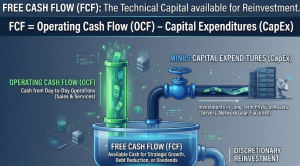
The basic formula is:
$$FCF = text{Operating Cash Flow} – text{Capital Expenditures}$$
If a company has $10 million in Operating Cash Flow but spends $4 million on upgrading its cloud infrastructure (CapEx), its FCF is **$6 million**.
FCF vs. Net Income
A common mistake for those new to finance is confusing Net Income (Profit) with Free Cash Flow.
- Net Income is an accounting figure that includes non-cash items like depreciation.
- FCF is about “cold, hard cash.”
A company can be “profitable” on paper but have negative FCF because all its cash is tied up in expensive hardware refreshes or unpaid invoices. For an IT manager, understanding this distinction is vital when timing large-scale infrastructure projects.
The Managerial Perspective
Moving into a management role means moving from implementing technology to justifying it. When you propose a migration from an on-premise data center (high CapEx) to a cloud model (Operating Expense), you are directly altering the company’s FCF profile. Being able to explain how your technical road map improves the “cash position” of the company marks the difference between a senior engineer and a strategic director.
For Further Reading
- Investopedia: Free Cash Flow (FCF) Explained
- Corporate Finance Institute: Free Cash Flow Guide
- Gartner: Glossary of IT Financial Management Terms